
The Infordata Sistemi team took part in the Open Day of the European INSPIRE project, held in Domžale, Slovenia, on 18 June. The event brought together specialists, researchers, companies and policymakers around a shared task: developing and testing ways to reduce microplastics in wastewater.

Tackling plastic pollution with digital tools
Among the day’s main sessions, Marko Petelin, Infordata’s project manager for INSPIRE, joined the round table “Addressing microplastics in wastewater treatment — emerging technologies, analytical tools, and digitalization”, setting out the company’s view and its work on the digital side.
Petelin underlined what digital technology, IoT and artificial intelligence bring to monitoring and analysing how the pilot plants perform. Infordata is building tools that collect data from the prototypes in real time, then analyse it with predictive models to tune how they run.
He also set out what digital twins make possible — simulating how effective a new technology would be before committing to building it — and the connections with the European EDITO (European Digital Twin of the Ocean) initiative, which aims to bring datasets, software and digital tools together for a deeper, more systemic understanding of seas, rivers and aquatic environments.
Infordata’s role in INSPIRE extends to managing and harmonising data: the company acts as data manager, helping to build standard protocols that make data comparable and interoperable across the different partners and demo sites.
The demo site running Infordata technology
Another development presented at the Open Day is a new technology under construction at Infordata, combining advanced water-monitoring sensors with AI to identify emerging contaminants and pathogens early. By cross-referencing sensor data across complex matrices and training predictive algorithms, environmental anomalies can be anticipated sooner and more reliably.
At its stand, the Infordata team showed the sensor and measurement kit developed with the University of Maribor. The kits are installed at the Domžale demo site and cover sensors for COD, pH, conductivity, turbidity, ORP, TOC and BOD, along with environmental probes (temperature and humidity), energy consumption meters and accelerometers for detecting mechanical vibration.
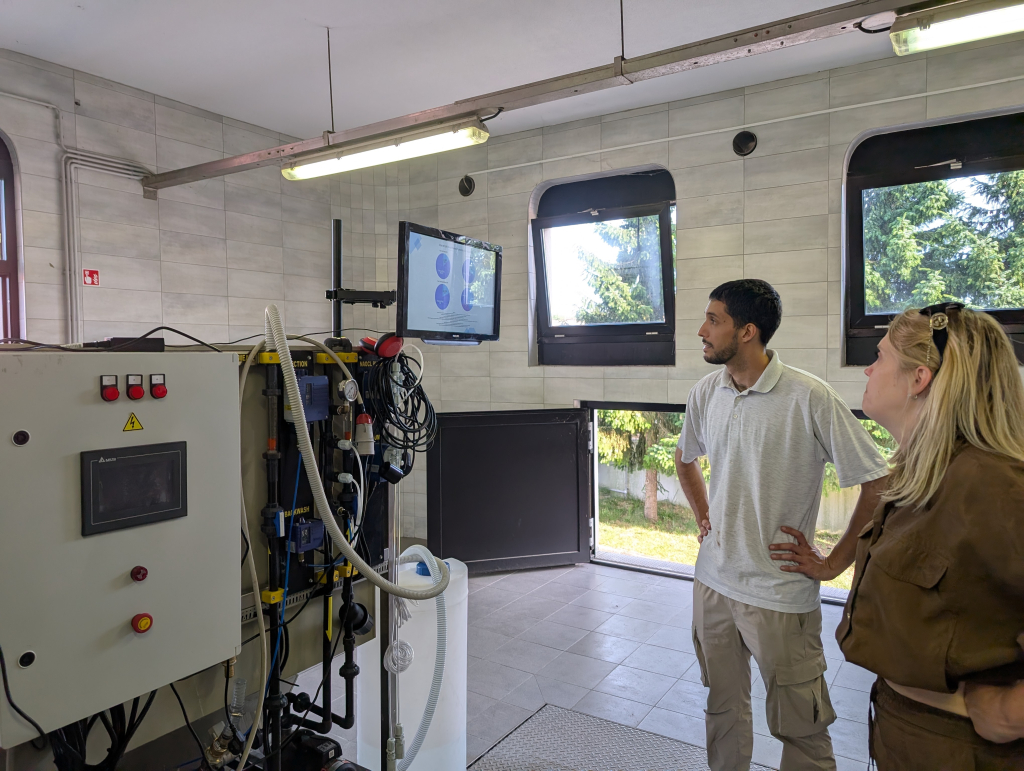
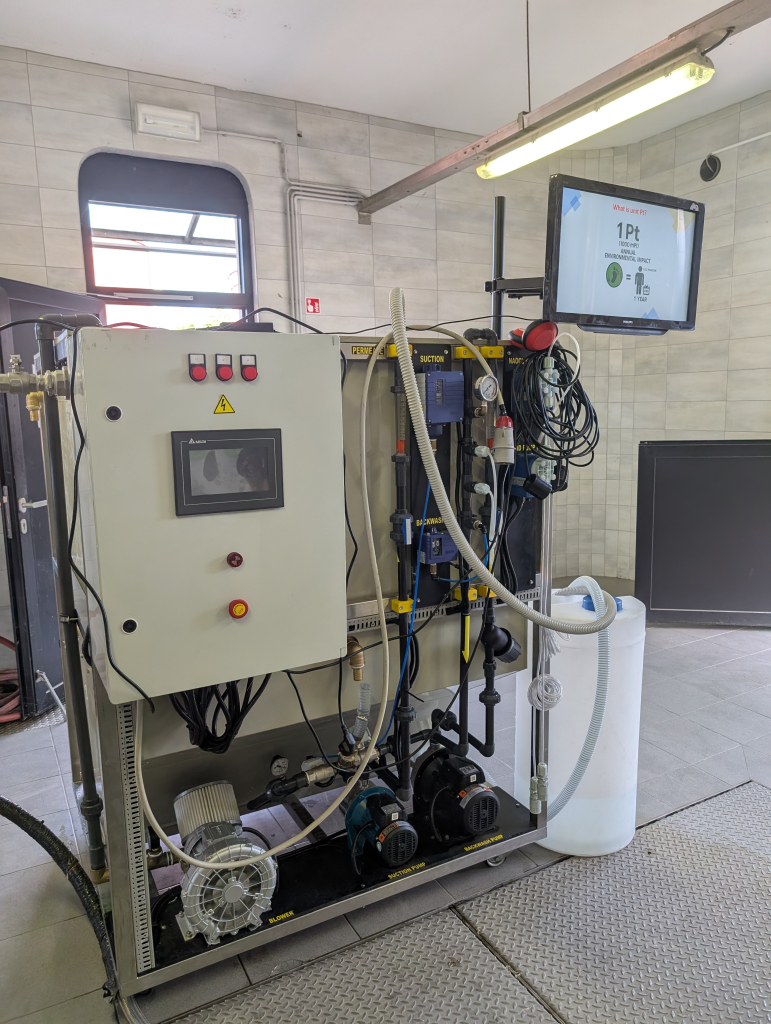
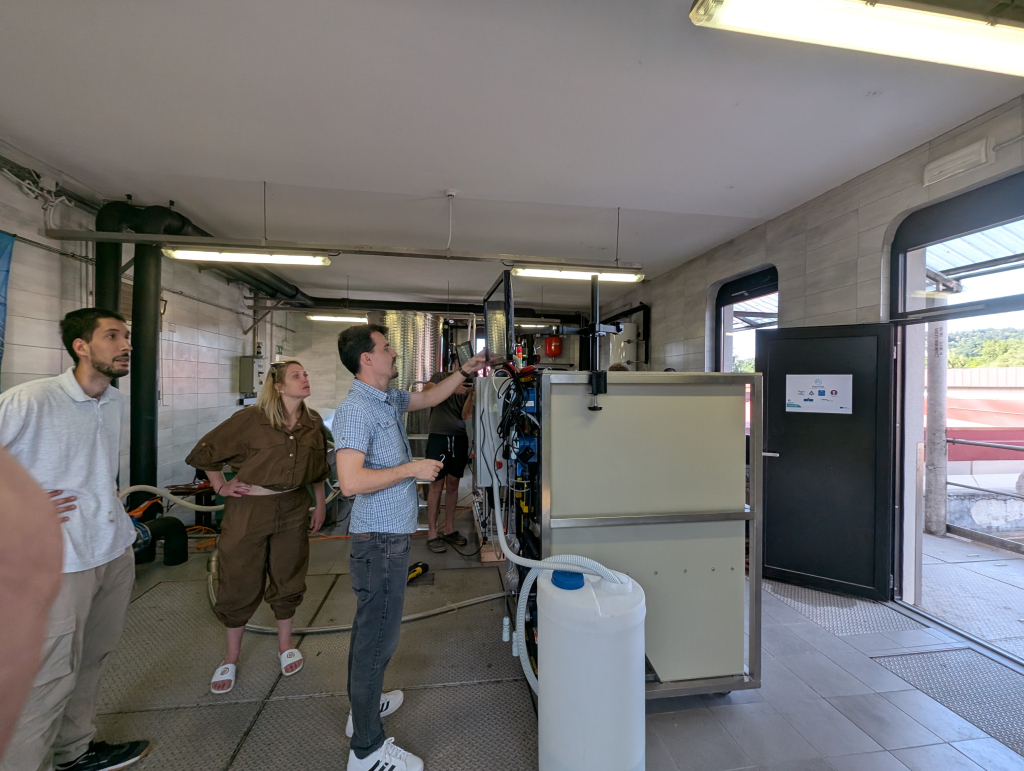
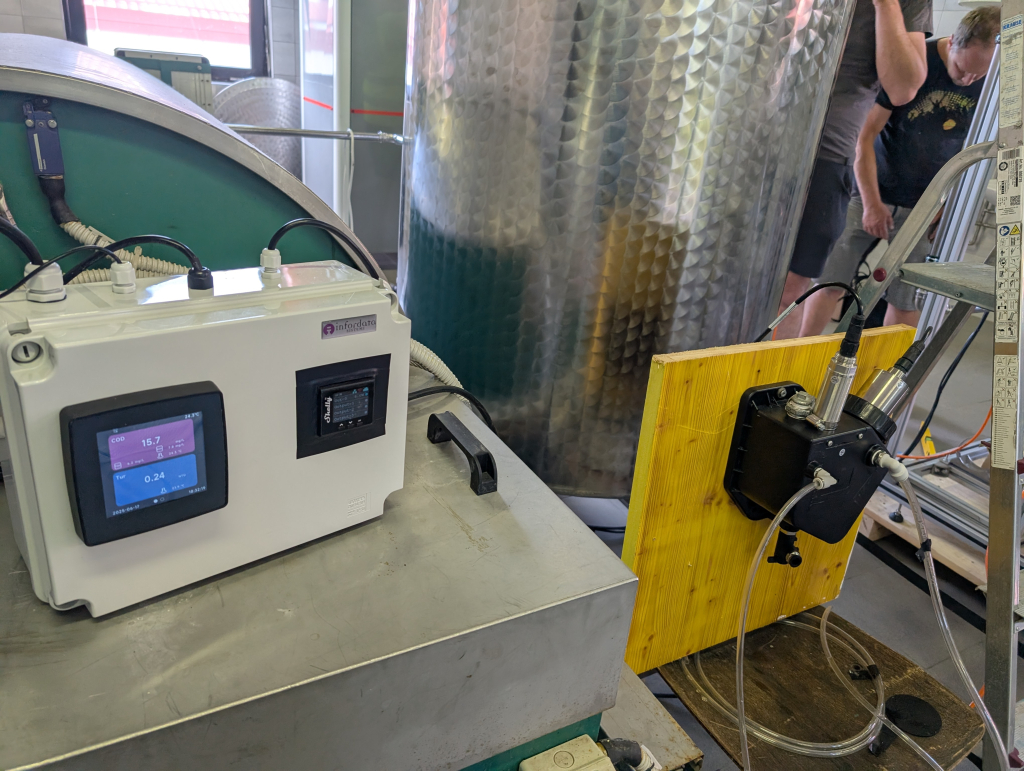
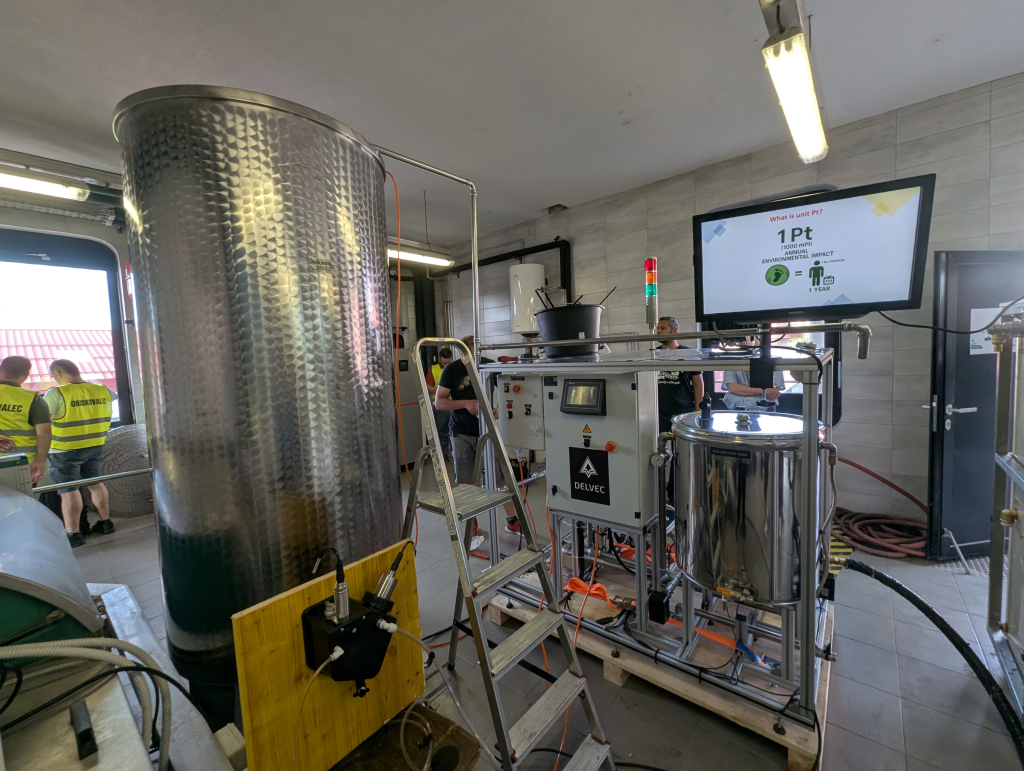
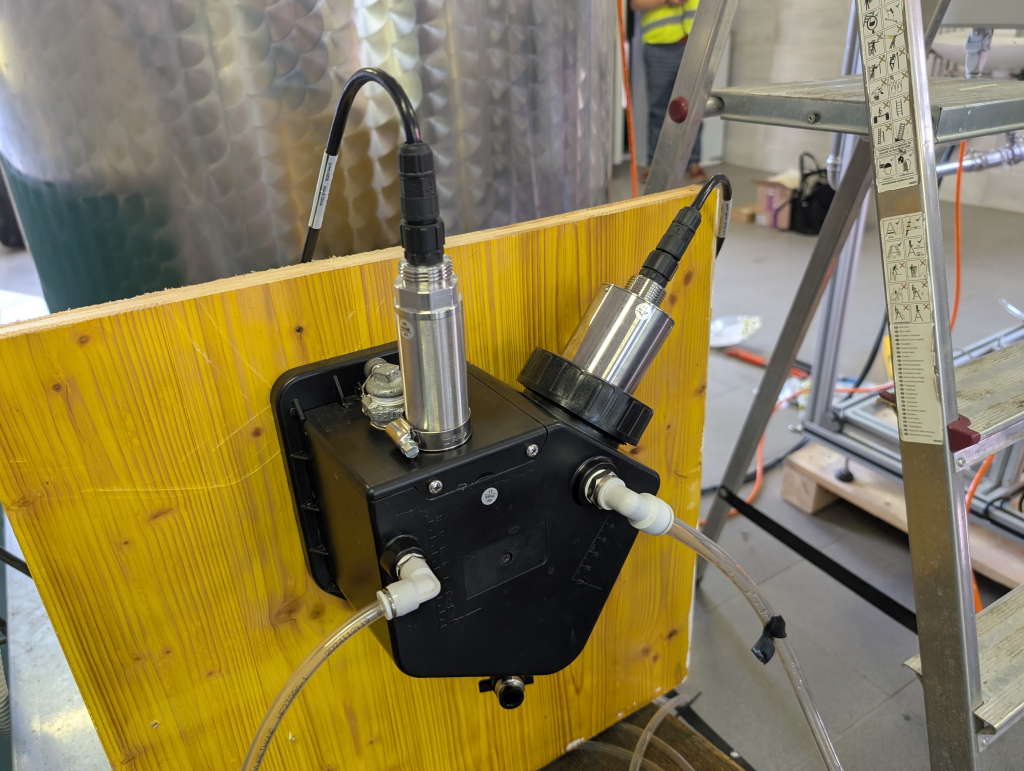
The data collected is sent in real time to the database behind the INSPIRE Impact Evaluation Dashboard, where it will be analysed over the coming months to assess how the experimental technologies installed are performing. In particular, the COD sensor will be used in specific tests exploring whether microplastics can be quantified indirectly. Monitoring will continue for at least a year, giving a solid basis for detailed and comparative scientific analysis.
The INSPIRE Open Day was an important occasion for exchange and visibility, and confirmed Infordata’s active part in the European landscape of environmental and digital innovation.