
Karst Firewall 5.0
- Home
- Technology and innovation for more sustainable growth
- Karst Firewall 5.0
Infordata sistemi for
Karst Firewall 5.0 – Innovative Ecosystem-Based Climate Change Adaptation
Infordata Sistemi is a partner in the Interreg VI-A Italy-Slovenia project «Karst Firewall 5.0», which started on 15 April 2024 and runs until 14 November 2026: 31 months of cross-border work to make the Karst more resilient to wildfires.
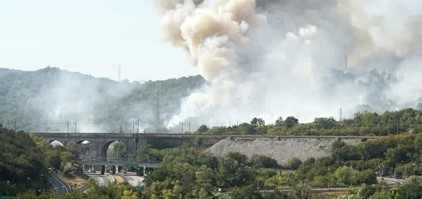
The fires in the 2022 summer seriously affected the inhabitants and their living environment on the Karst region on the slovenian/italian border and destroyed several assets. Therefore, the municipality of Devin Nabrežina/Duino Aurisina in Italy and the municipality of Miren Kostanjevica in Slovenia, where the fires took place, together with 4 other partners agreed that there is a need to address climate change impacts on both sides of the border with additional risk reduction measures, focusing on forest management and fire risk prevention.
The project’s public milestone was the final conference held on 26 May 2026 in Cerje (Miren-Kostanjevica), where the results were presented: shared adaptation strategies, a risk-reduction handbook and a cross-border digital platform that is now freely accessible to institutions, first responders and citizens.
The Karst Firewall 5.0 portal is online
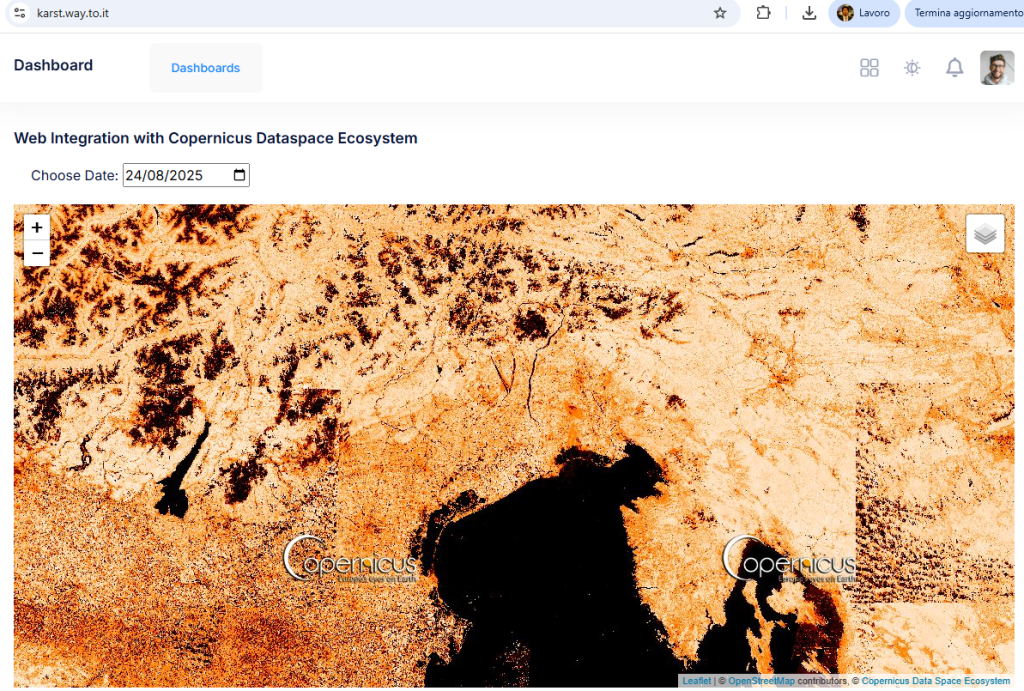
The cross-border digital twin of Karst wildfires: live risk map, data from more than 40 weather stations, early warning and fire history, freely available in English, Italian, Slovenian and German.
Karst Firewall 5.0 aims to create cross-border action plans to reduce vulnerability and detect fires in the Karst heath using advanced monitoring and warning systems. Key components include:
- An integrated digital platform for fire management
- An AI algorithm for fire prediction
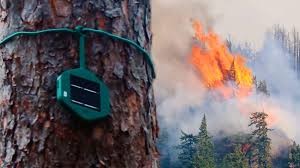
- Monitoring technologies
- An alert system for inter-institutional collaboration
Expected improvements
- to define a model with innovative strategies for forest fire prevention and management based on Karst ecosystem analysis, with a focus on environmental conservation;
- improving integration in the decision-making process with the development and dissemination of ICT technologies;
- supporting climate change adaptation actions with dedicated responses to the karst heath with the introduction of resilient tree species;
- the promotion of integrated infrastructure for forest fire prevention and management;
- the development of common approaches for awareness raising and capacity building in forest fire monitoring and early warning.
The fire risk reduction
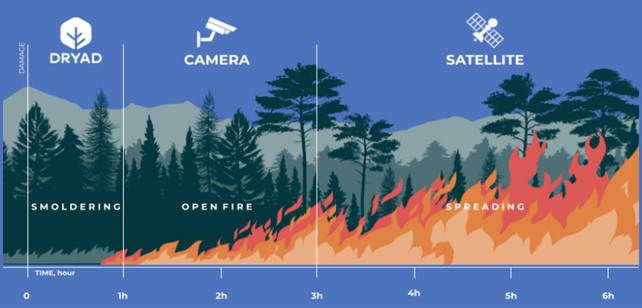
The fire risk reduction will include the use of innovative digital systems that make use of advanced technologies (electronic noses, drones, satellite images, predictive algorithms), aimed at supporting forest fire risk assessment and monitoring and forest fire adaptation, prevention and management strategies
Infordata Sistemi will develop platform solutions which will garantee the management of the monitoring and maintenance work of these digital systems.
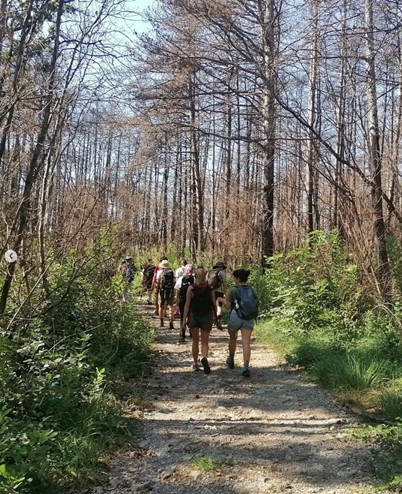
In this sense, cross-border training and collaboration for the adoption of advanced technologies in forest fire prevention and management strategies will be another key point to promote more effective cross-border prevention systems and management protocols using human-machine interaction mechanisms (Industry 5.0 concept approach).
What you find in the portal
The public portal developed by Infordata Sistemi brings together in one place the data, models and tools produced by the project. It is open to everyone and needs no registration:
- Live risk map — real-time K-FWI index across the area of interest
- Weather stations — real-time data from more than 40 stations
- Karst Fire Weather Index — index history and weather charts
- Air quality — PM2.5, PM10, NO₂, O₃
- E-nose early warning — detection of the volatile compounds of wildfire smoke, with integrated surveillance
- Fire history — past events and burnt areas
- 3D digital twin and simulator — territory visualisation and scenarios
- Open science — API reference for integrations and open code on GitHub
Project results
Karst Firewall 5.0 delivered three main results, from strategy to operational tools:
- Joint wildfire adaptation strategies — scientific analysis based on MaxEnt modelling and multi-criteria analysis, together with a handbook of concrete risk-reduction measures: selective removal of flammable material, firebreaks, dry stone wall maintenance, targeted grazing and building restrictions in the most exposed areas.
- Cross-border cooperation between organisations — the collaboration model between the six partners on analyses, pilot actions and workshops, designed to continue beyond the end of the project through platform maintenance and territory monitoring.
- Innovative solution for prevention and early warning — the cross-border digital platform integrating the first joint historical database between Italy and Slovenia, with over 5.2 million weather records and nearly 4,000 fire records, the K-FWI index, sensor networks and multilingual early warning, reaching 77.5% fire detection accuracy.
The research: wildfire risk on the Karst by 2040
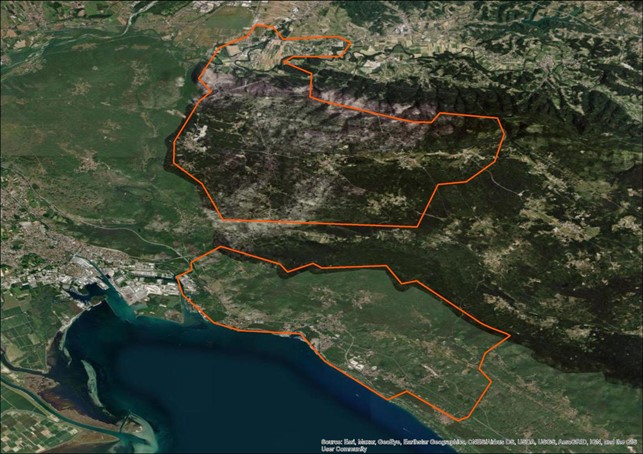
The analysis covered roughly 1,000 km² of cross-border territory and distinguishes two dimensions of risk: hazard, the probability that a fire starts, and vulnerability, how sensitive an area is once a fire occurs. The main findings:
- Over recent decades the average annual temperature has risen by more than 1 °C: there are now over 50 days a year above 30 °C and the number of tropical nights has tripled.
- More than two thirds of the recorded fires started less than 50 metres from a road or a path: proximity to roads, railways and settlements is the single most relevant hazard factor.
- More than 90% of the Karst falls into the high or very high vulnerability classes.
- By 2040 the area classified as very highly vulnerable is expected to grow by about 5% of the whole territory; hazard will rise mostly inland, while along the coast it may decrease slightly.
The road finding is also the most actionable one for prevention: clearing dry vegetation along the road network, early-warning systems, public awareness and bringing traditional grazing back to encroached areas. Read the full story.
Project partners
The partnership brings together six Italian and Slovenian organisations:
- Università IUAV di Venezia — lead partner (Italy)
- Infordata Sistemi Srl Società Benefit (Italy)
- Comune di Duino Aurisina – Občina Devin Nabrežina (Italy)
- Občina Miren-Kostanjevica (Slovenia)
- ZRC SAZU — Research Centre of the Slovenian Academy of Sciences and Arts (Slovenia)
- PiNA — Kulturno izobraževalno društvo / Cultural and Educational Association (Slovenia)
Several associated partners also take part, among them the Regional Forestry Corps of Friuli Venezia Giulia, GAL Carso – LAS Kras, Zavod za gozdove Slovenije, the Nova Gorica fire and rescue unit, Šolski center Srečka Kosovela in Sežana, the partnership for the preservation of Karst dry stone building, the Marucelli Omar farm and Kmečka zveza – the Farmers’ Association.
Project fact sheet
- Programme: Interreg VI-A Italy-Slovenia 2021-2027, co-funded by the European Union (ERDF)
- Specific objective: SO 4 — Promoting climate change adaptation, disaster risk prevention and resilience, taking into account eco-system based approaches
- Duration: 31 months, from 15 April 2024 to 14 November 2026
- Total budget: € 1,061,955.44
- ERDF contribution: € 849,564.34
- Partners: 6 (3 Italian and 3 Slovenian)