
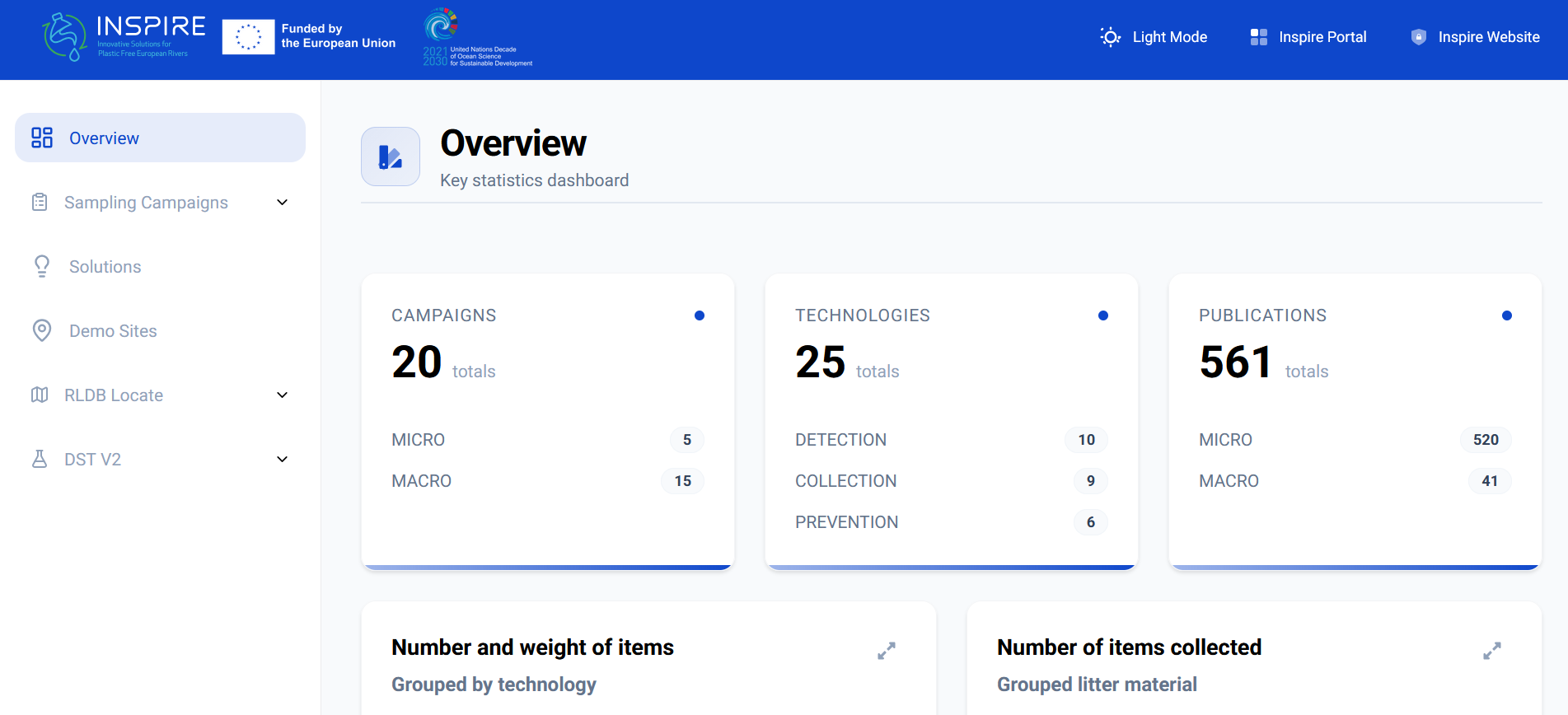
INSPIRE DSTv2 brings together monitoring data, technologies, and interactive maps in a redesigned public dashboard.
The INSPIRE project has released DSTv2, the second major version of its public Decision Support Tool dashboard, offering researchers, policy stakeholders, and citizens a new way to explore data and technologies related to plastic and microplastic pollution. The updated platform expands the project’s interactive capabilities while making scientific information more accessible through a redesigned and openly available interface.
DSTv2 supports INSPIRE’s broader mission to improve understanding of plastic pollution in inland and marine waters and to support evidence-based environmental action across Europe. In the development of the new platform, Infordata Sistemi played a central role in the design and implementation of the new Decision Support Tool v2, contributing to the renewal of the user experience and the integration of new interactive functionalities.
What DSTv2 is
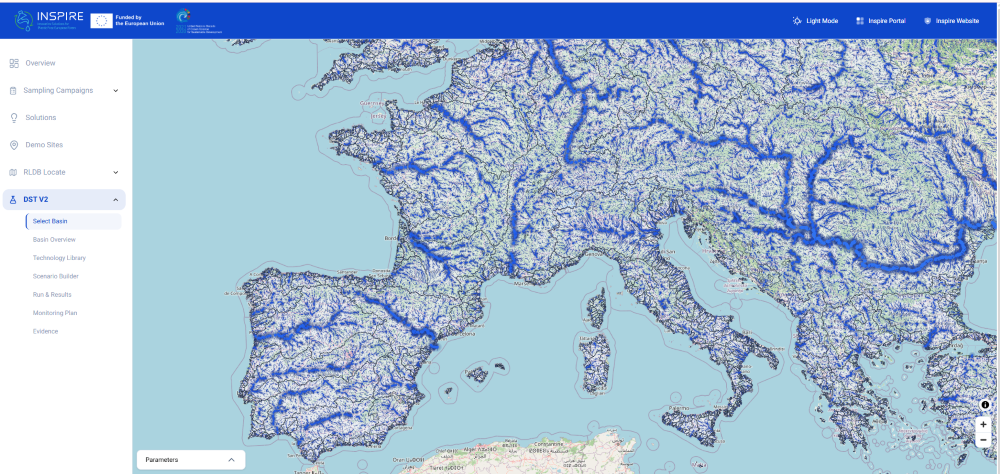
DSTv2 serves as the public-facing dashboard of the INSPIRE project, bringing together environmental monitoring results, sampling campaign datasets, and technology information into a single explorable platform. The tool enables users to navigate between field observations, analytical visualisations, and clean-up or prevention technologies through an interface designed for both scientific and non-specialist audiences. By combining datasets and interactive geographic views, the dashboard creates a shared access point for understanding how plastic pollution moves through rivers, estuaries, and marine environments.
What’s new in v2
The second major release of the INSPIRE Decision Support Tool introduces a redesigned user experience together with expanded mapping and exploration capabilities. DSTv2 focuses on improving accessibility, geographic context, and data discoverability across the platform.
Overview redesign
The Overview section has been rebuilt around a clearer visual structure, combining KPI cards for Campaigns, Technologies, and Publications with seven analytical widgets and an interactive 3D globe map. The redesign allows users to gain a rapid understanding of project activity and environmental monitoring outputs from a single entry point.
Solutions catalogue with Impact scoring
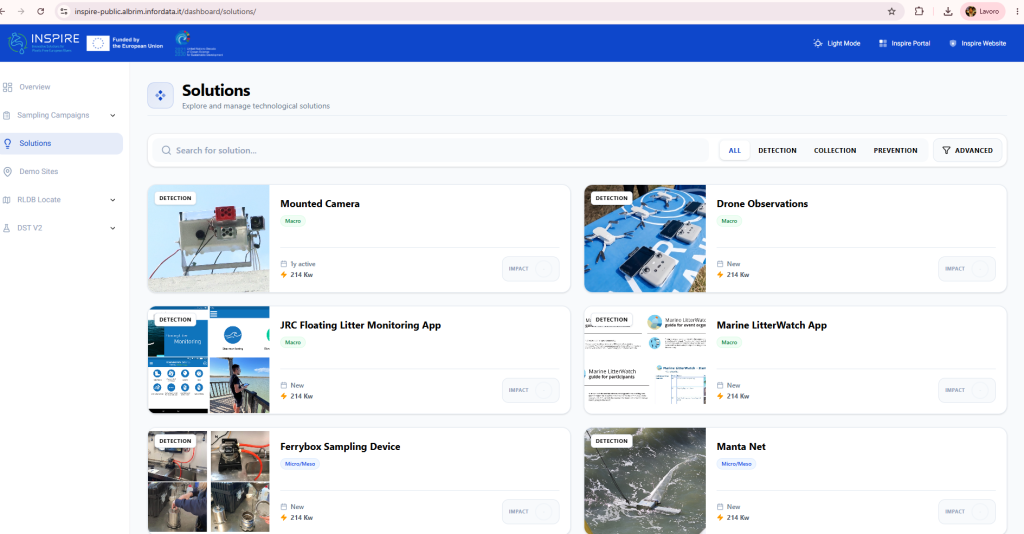
The Solutions section introduces a rebuilt and searchable catalogue of technologies developed or monitored within the project. Users can filter technologies by Detection, Collection, or Prevention categories, as well as by litter type. Each entry includes an Impact score designed to support comparative exploration and evaluation.
Demo Sites map
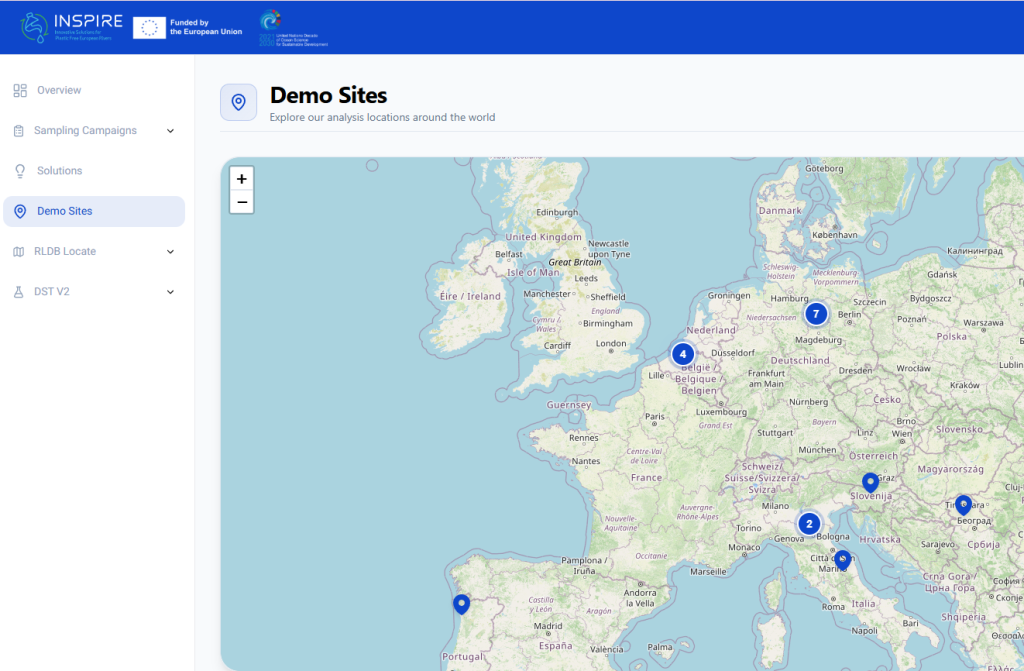
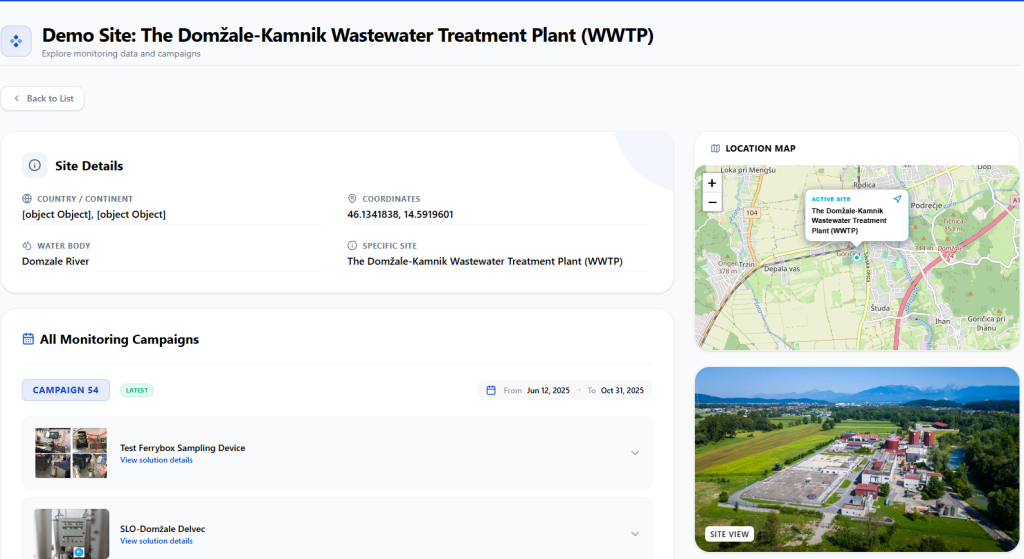
The Demo Sites section adds a geographic layer to the project’s field activities by presenting deployment locations through an interactive world map. The feature provides users with additional spatial context for understanding where INSPIRE activities and demonstrations are taking place.
RLDB Locate
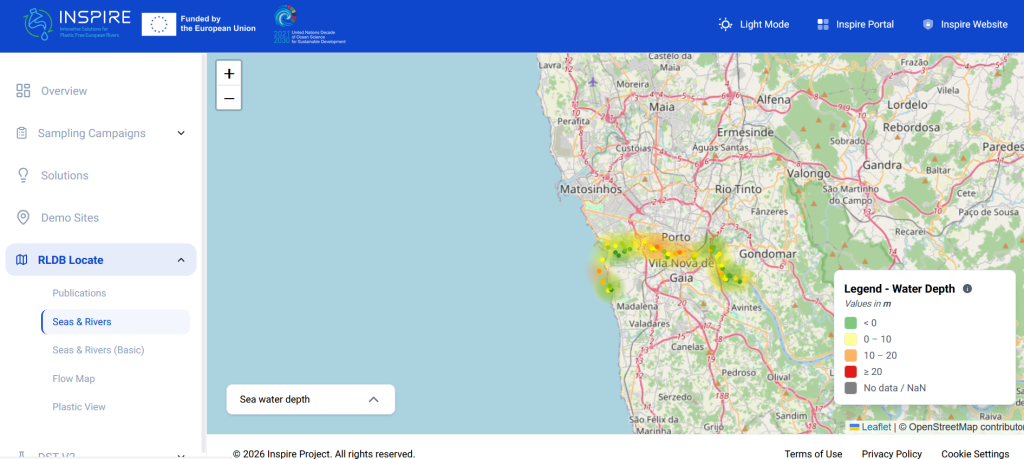
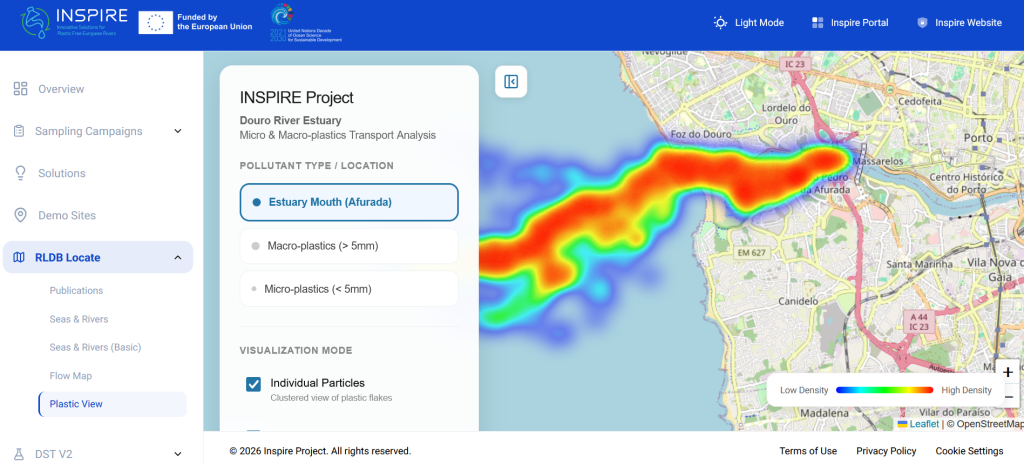
One of the central additions in DSTv2 is RLDB Locate, a new suite of six interactive mapping tools. The section includes Publications, River Pollution, Seas & Rivers maps with both advanced and basic depth views, a Flow Map, and Plastic View — a simulation of the Douro River Estuary that visualises micro and macro plastics using cluster and heatmap layers. Together, these maps provide multiple ways to explore environmental patterns, research outputs, and river-to-sea pollution dynamics.
Sampling Campaigns at the core
Sampling Campaigns remain central to the INSPIRE platform. Through DSTv2, users can access both Microlitter & Mesolitter datasets and Macrolitter campaign information gathered through project activities. These datasets provide insight into the distribution and characteristics of plastic pollution across different aquatic environments while supporting comparative analysis and long-term monitoring efforts.
Open by design
DSTv2 has been developed as an open-science resource accessible without registration or login requirements. Researchers, policy makers, educators, and interested citizens can freely explore the dashboard, interact with visualisations, and examine project data through a publicly available interface. The platform reflects INSPIRE’s commitment to transparent environmental research and broader public engagement with plastic pollution challenges.
Explore the dashboard
The release of DSTv2 marks an important step in making environmental monitoring and plastic pollution research more accessible across scientific and public communities. By combining datasets, geographic visualisation tools, and technology catalogues within one platform, the dashboard supports INSPIRE’s contribution to ongoing European discussions on pollution monitoring, mitigation, and policy development.